
Models Vs Tools
There are plenty of different models and even more AI tools out there. It is almost impossible to open an app today without finding some kind of “AI-powered” feature built in.
But not all AI is the same. In education, that distinction matters.
When we talk about models, we are referring to the Large Language Models themselves, the engines generating the responses. Examples include ChatGPT, Gemini, and Copilot. These systems are trained on vast amounts of text data to recognise patterns in language and generate human-like responses. They are not lesson planners or marking assistants by design. They are language prediction systems.
Everything else sits on top of them.
AI tools such as TeachMate or MagicSchool are built using these underlying models. They wrap the model inside a specific interface and workflow. For teachers, this often means selecting a year group, subject, and topic, clicking generate, and receiving a ready-made output.
So what is the difference?
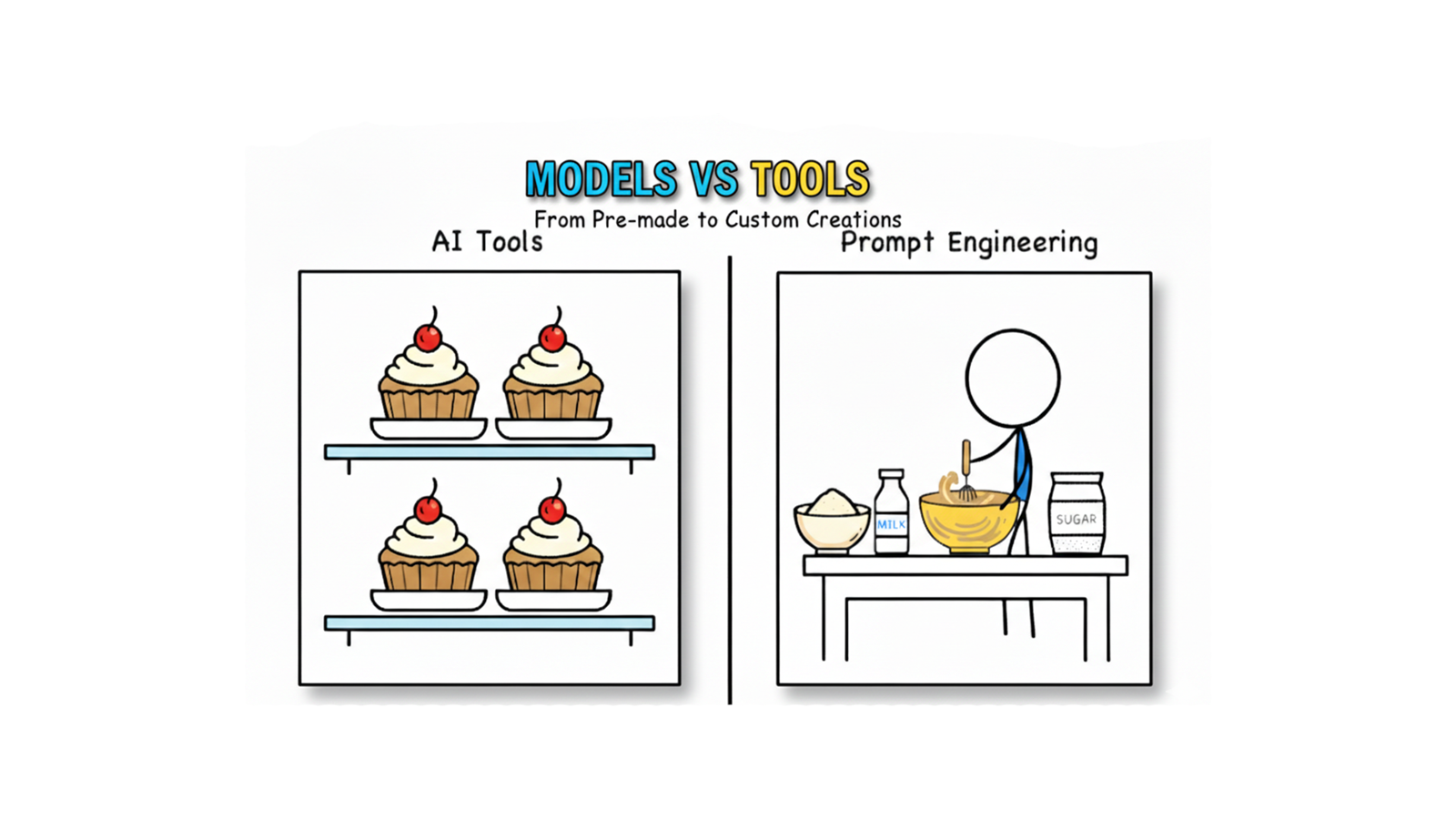
Think of it like baking.
AI tools are the pre-made supermarket cake. Convenient. Reliable. Designed to look good straight out of the box.
Using a model directly is baking from scratch. You choose the ingredients. You adjust the recipe. You taste as you go. You decide whether it needs more structure, more stretch, more scaffolding.
When you use a tool, the actual prompt, the detailed instruction sent to the model, is hidden behind the curtain. You add your sprinkles: a topic, a class, perhaps a differentiation note. But you do not see the recipe shaping the output. You cannot easily refine the internal logic driving the response.
The benefit is speed and simplicity.
The trade-off is control and visibility.
When you work directly with a model, the interaction becomes conversational. You can refine, challenge, and reframe. You can say, make this more accessible for a lower reading age, or increase the cognitive demand, or strip this back and focus on misconceptions. You build context over multiple exchanges.
And context in education is everything.
A Year 7 class on a wet Friday afternoon is not the same as a high-attaining Year 11 group before mock exams. Tools tend to generate static outputs. Models allow dynamic dialogue.
This is why understanding prompts and the craft of refining them is so valuable. A well-designed prompt functions like well-planned questioning in the classroom. It shapes thinking. It anticipates misconceptions. It clarifies outcomes.
If teachers rely only on pre-built tools, they gain efficiency.
But they may lose adaptability.
The real professional power lies in knowing when to use each, and understanding what is happening beneath the surface when you do.
Years of
Experience
Prompts
Engineered
Satisfied
Happy Clients
Coffees
Drank
Get in touch
Booking a talk, planning a campaign, or want my prompt library for your team? Drop a line and let's build it.I read everything and respond quickly.